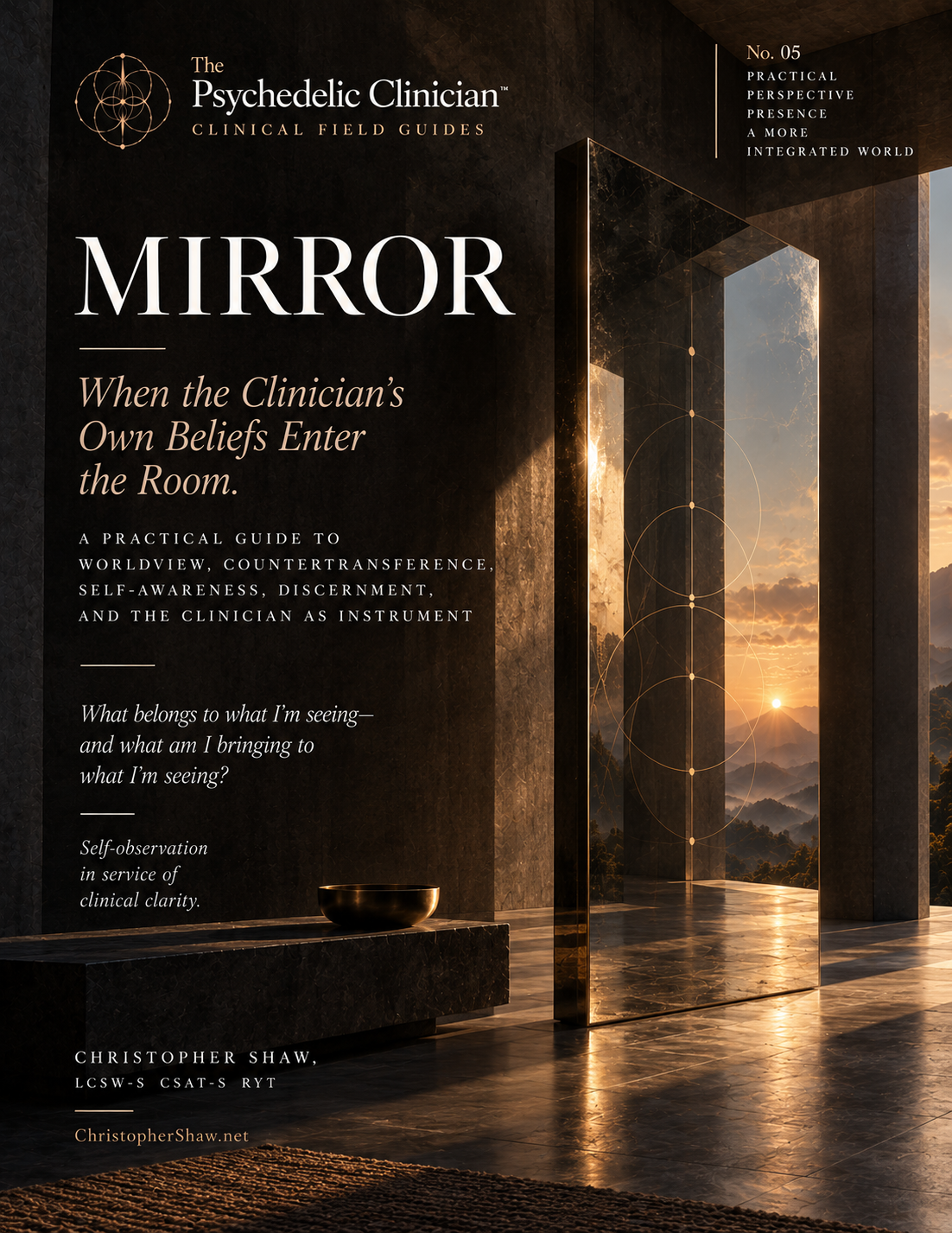
The client is not the only person bringing beliefs, experiences, assumptions, and reactions into the therapy room.
When clients talk about psychedelics, spirituality, healing, medication, extraordinary experiences, or profound changes in worldview, clinicians inevitably have responses of their own.
Agreement. Skepticism. Concern. Recognition. Excitement. Fear. Hope.
The question is not whether clinicians can eliminate these responses. It is whether we can recognize what we are bringing into the room before it begins directing the work.
Clinical Field Guide No. 05 explores the clinician’s own worldview, personal experience, assumptions, countertransference, and self-disclosure as meaningful dimensions of psychedelic-informed clinical practice.
Rather than asking clinicians to become neutral or belief-less, this 10-page guide offers practical ways to notice internal reactions, examine where they may be coming from, distinguish clinical judgment from personal conviction, and remain curious when either enthusiasm or skepticism begins pulling the work in a particular direction.
Clinicians will find self-awareness frameworks, reflection tools, guidance for navigating self-disclosure, practical therapist language, clinical discernment prompts, and a standalone printable Desk Guide designed for ongoing use in practice.
Because psychedelic-informed competence is not only about what the clinician knows.
It is also about how well the clinician knows the instrument through which that knowledge is being used.
Clinical Principle 05: The clinician is never absent from the clinical field.
Digital download · 10-page PDF · Includes standalone 8.5 × 11 printable Desk Guide
For educational purposes. Clinicians remain responsible for practicing within their competence, professional scope, jurisdiction, and applicable ethical and legal requirements.
