ABOUT CHRISTOPHER SHAW
I’ve spent my career helping people change.
Now I’m helping clinicians learn how to hold that change.
For nearly two decades, my work has lived at the intersections of psychotherapy, addiction and recovery, sexuality, spirituality, trauma, psychedelic experience, and profound human transformation.
Christopher Shaw, LCSW-S CSAT-S RYT
Clinical Educator · Consultant · Psychotherapist · Psychedelic Medicine Practitioner · Speaker

MY STORY
I kept finding the edge of the clinical map.
For most of my career, I trusted the tools I had been given. I trained deeply in addiction and recovery, sexuality, trauma, Internal Family Systems, cognitive-behavioral, psychodynamic, and transpersonal approaches, to name a few. I built a practice, supervised clinicians, and spent years helping people navigate some of the most complicated moments of their lives.
And when psychedelics or earth medicines entered the conversation, particularly with clients in recovery, I was often cautious. Sometimes very cautious. I understood the risks, and my own recovery made those questions deeply personal.
Then my life changed.
After eleven years of sobriety, I relapsed during a period of profound personal upheaval. What followed were several difficult years of trying to regain something I thought I already knew how to do. I returned to the practices, therapy, recovery work, and spiritual disciplines that had supported me before. And still, something was missing.
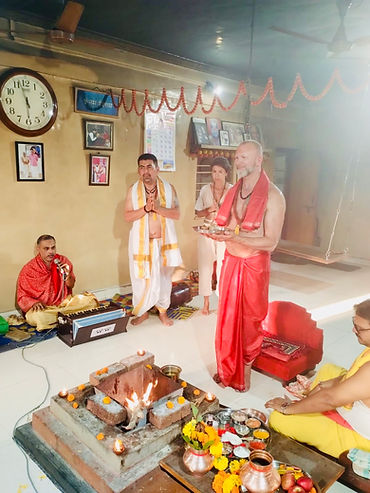
Eventually, my own search led me to an earth-medicine retreat in Mexico. That experience changed the trajectory of my life.
It did not give me a universal answer. It gave me a deeply personal one. My relationship with recovery changed. My spiritual life changed. And after a period of uncertainty about what the next chapter of my professional life would be, my direction became remarkably clear.
I began studying. I trained in psychedelic medicine and indigenous medicine traditions in Mexico, pursued additional education in the United States, began working more intentionally with psychedelic/earthmedicine preparation & integration, and eventually found myself on the other side of the position I had once occupied.
I had gone from being cautious enough to sometimes become the gatekeeper to being enthusiastic enough to sometimes become the cheerleader. Neither was sufficient.
What emerged was the clinical stance I now teach: a third posture—one grounded in openness without credulity, harm reduction without endorsement, curiosity without projection, and respect for transformative experience without abandoning clinical discernment.
And then my colleagues began calling. Clinicians and supervisees were encountering psychedelic experiences in their own caseloads and asking increasingly urgent questions: What am I supposed to do with this?
That question changed the direction of my work. Because I realized the edge of the map wasn’t somewhere outside our profession anymore. It was already in the therapy room.
Today, much of my work is devoted to helping clinicians develop the knowledge, presence, discernment, and ethical capacity to meet what is already arriving there. That is why I teach. That is why I consult. And it is why I am writing The Psychedelic Clinician.
WHAT I BELIEVE
The Clinician matters as much as the clinical model.

Presence
before
technique

Curiousity
before
certainty.

Discernment
before
interpretation.
These principles shape how I practice, teach, consult, and supervise.

Ethics
before
enthusiasm.

Integration
before
insight.

Humility
before
expertise.


THE INTERSECTION IS THE POINT
Psychotherapy
+ Psychedelics & Earth Medicine
+ Addiction & Recovery
+ Spirituality
+ Sexuality
+ Human Transformation
Human beings do not arrive in our offices divided according to our professional specialties. These experiences overlap, collide, and reshape one another. Some of the most important questions facing contemporary clinicians live precisely at those intersections.
WHY I TEACH CLINICIANS
Better therapy requires more than better techniques.
After years of sitting with clients and supervising clinicians, I have become convinced that the future of psychotherapy depends not only on what clinicians know, but on who clinicians become.
Knowledge matters. Evidence matters. Technique matters. But so do presence, discernment, humility, emotional regulation, curiosity, and ethical courage.
I call this Clinical Formation.
And increasingly, it is the work I feel called to teach.


BEYOND THE CLINICAL ROOM
A human being, too.
I am a clinician and educator, but I am also a person shaped by long-term recovery from addiction & trauma, marriage, divorce, marriage, relationships, spiritual practice, yoga and meditation, loss, ceremony, community, and my own ongoing encounters with tranformation.
Those experiences haven't given me all the answers.
They've made me much more respectful of the questions.